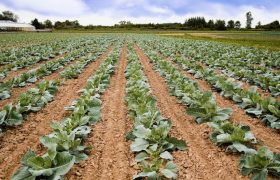
MANGO FARMING

The mango is a deep-rooted, evergreen plant which can develop into huge trees, especially on deep soils. The height and shape varies considerably among seedlings and cultivars. Under optimum climatic conditions, the trees are erect and fast growing and the canopy can either be broad and rounded or more upright. Seedling trees can reach more than 20 m in height while grafted ones are usually half that size.

Mango is one of the most important fruit crops in the tropical and subtropical lowlands. The mango industry in Kenya has expanded considerably over recent years, not only in size but also in the geographical location of commercial and homestead plantings. No longer is commercial mango cultivation restricted to the Coast region, as significant plantings of improved cultivars now also exist in the Makueni county, Meru County, Murang’a County, Nairobi County, Nakuru County, Siaya County, Taita Taveta County, Tana River County, Tharaka Nithi County, Bungoma County, Kitui County, Embu County, Machakos County, Kiambu County among other regions. But the generally arid eastern region produces 61 per cent of all mangoes, followed by Rift Valley at 30 per cent and Coast, which produces 28 per cent.

Main characteristics that differentiate varieties are the fruit shape, size, aroma, sweetness, color, fiber, content, taste, seed size and resistance to diseases. Proper selection of a mango cultivar for production must consider the following criteria:

•           Good adaptation to the local conditions (e.g. rainfall and dry periods)

•           Alternation of flowering and fruiting

•           Tolerance to pest and disease infections

•           Designated use and market requirements

The mango is best adapted to a warm tropical monsoon climate with a pronounced dry season (3 months) followed by rains. However, information from other countries indicates that crops cultivated for a long time over an extended area show a high degree of diversity due to varied environmental influences.

Varieties include; Apple mango, Kent, Haden, Tommy Atkins, Van dyke etc.

Mangoes are the most popular and full of nutritional and unique taste. Its rich in vitamin A,C,E, and K.

COURTESY OF GOOGLE
GARLIC FARMING

Garlic growing is done using seed cloves; hence, as an aspiring garlic grower, you must procure certified garlic seeds that have fully matured cloves and are free from any diseases. Such seeds can be bought from a garden center or approved Seed Company. When selecting the best seed cloves, go for the largest as they will yield a better crop as compared to small ones. The three main varieties that do well in Kenya include softneck, hardneck and elephant types of garlic. Softneck is the most popular and characterizes by a white, paper-like skin with a fairly strong taste and pungent smell. It is one of the easiest variety to grow. Softneck has varieties like Creole, California Early, and California Late. Hardneck characterizes with a tan and purple markings. It is a variety that produces bigger and fewer cloves on each head. However, hardneck does not store well for longer durations like in the case of softneck. Hardneck has varieties such as Roja and German Extra Hearty. The last type Elephant garlic, is also another popular variety found in many grocery stores on the country. Characterized by a large head and huge cloves. Moreover, it possesses a subtle flavor with a mild odor as compared to the first two types of garlic. Climatic conditions Garlic farming performs well in medium to high attitudes of 500- 200M. Additionally, garlic requires high temperatures of 30ºC to aid in proper bulb development. However, during the preliminary stages, cooler temperatures are preferred as they assist in vegetative growth needed for plant establishment. For this reason, ideal temperatures for growing garlic range between 12-24ºC. It is worth noting that excess rains and humidity is bad for garlic’s vegetative growth as well as bulb formation and as such the crop will perform well in areas with low rainfall possibly substituted with irrigation during the initial phase when water requirement is utmost. Soils Garlic planting needs a ground with a pH ranging from 5.5 to 6.8. For this reason, garlic growing is suitable in most Kenyan grounds provided that they drain as well as the crop performs poorly in water-logged soils. Farmers should avoid garlic growing in clay soils as much as possible as it hinders the enlargement of the bulbs. Furthermore, you need to ensure that the soil is well prepared with loose and airy depths of up to 6- 8 inches and needs to be dry and without any rocks and plants debris. To ensure optimum yield, mix the soil with organic manure before plowing as this will facilitate improved bulb formation. Actual planting and spacing Growing of garlic is not as hard. You only need to select the best cloves and separate them with a spacing of 30cm between the rows and 15 cm or 6 inches from each plant. Using a hoe, dig and create trenches that are 25cm deep. Sow single garlic with its root down, and its point is facing up the hole. After doing this, cover the clove with loose and airy soils. Repeat the process until all seeds have planted 6 inches apart from each other. Ensure the next row of seeds is 2 feet or 60cm apart from the first one. Water the rows slightly and stop when the soil surface is slightly damp to avoid over-watering. Excess water will make the seed cloves to rot before they can grow. Mulch and manure application After planting your garlic seeds, you need to safeguard them from harsh conditions using a thick layer of mulch. You can use anywhere between 4 to 6-inch layer of either straw, chopped leaves or grass and place them above the rows. By doing so, the seeds will insulate protecting them from severe winter conditions. This mulch needs removal on the first day of spring when the temperatures are 55 or 6o degrees F as this is around when the garlic seeds will start to sprout. After the removal of mulch and with moderate temperatures in spring, apply a light all-purpose fertilizer every 30 to 40 days. The best fertilizer is 5-5-5 or 10-10-10 which specify the amount of Nitrogen, Phosphate, and Potassium respectively in that specific fertilizer. Apply the fertilizer by sprinkling its granules on the sprouting garlic and ensure that the granules do not touch the actual plant; this is because they may burn the plant or pose other harmful effects. Most manufacturers recommend applying the fertilizer at a rate of ¾ per 100 square feet. COURTESY OF GOOGLE

picture by Google

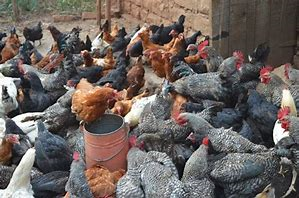
poultry farming is the most paying idea that a young person can engage himself in. it always requires a little amount of capital to start starting from ksh1000, in a month if involved with farming in layers field, you can be having a profit double the capital you had. if you buy five chickens the labour will be minimal, 5kgs of layers mash and then allow the chicken to look for their own food. provide clean water, a clean environment and the journey will have commenced.

Design a site like this with WordPress.com
Get started